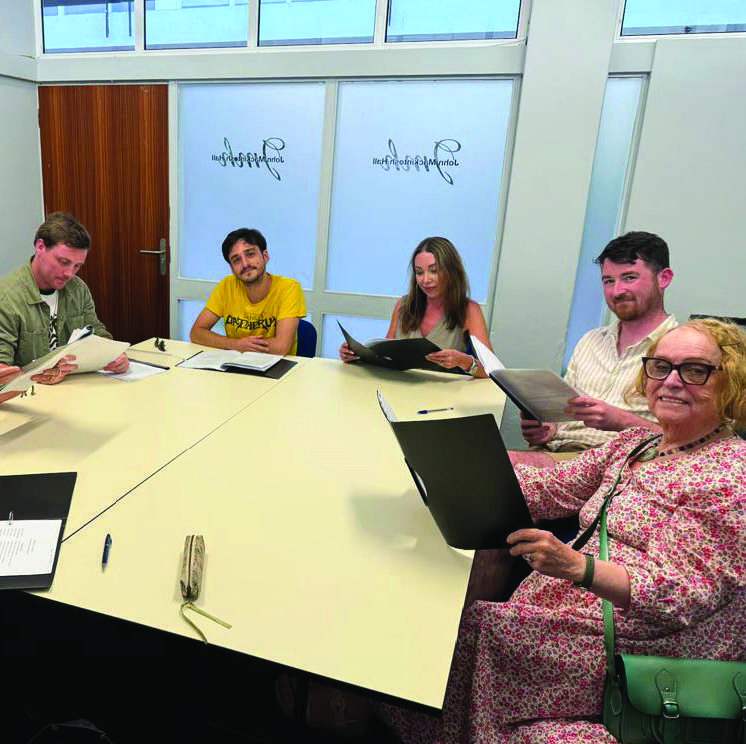
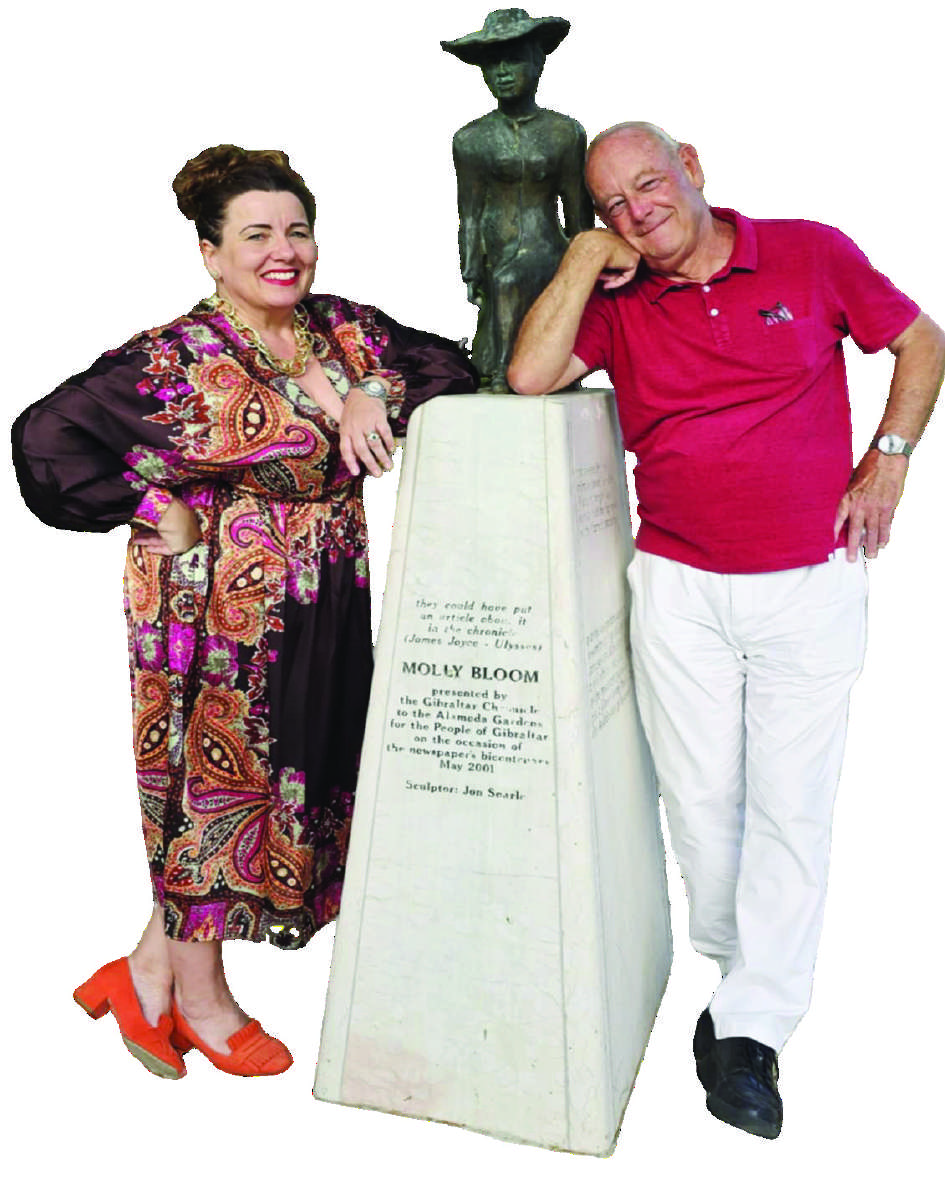
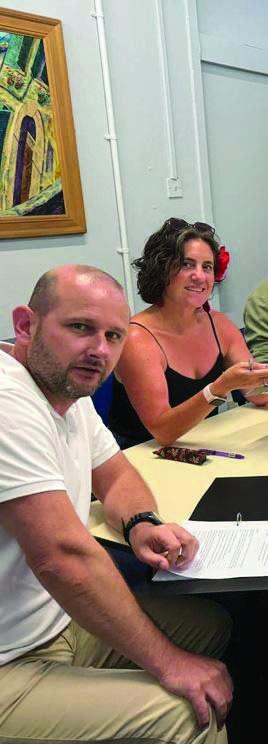


Local writer Rebecca Calderon and Patrick Sacarello are organising a Bloomsday celebration in Gibraltar to mark the work of James Joyce in his novel Ulysses.
The event will feature an original play for Rebecca Calderon and is set place on June 16, 2025 at 6.30 pm in the Alameda Gardens by the Molly Bloom statue.
The free event invites attendees to dress in early 20th-century attire and will continue at the nearby Rock Hotel, where people will gather around the piano for a night of Irish songs and music.
Bloomsday is observed annually on June 16, the day on which Ulysses is set, a Thursday in 1904, named after the novel’s protagonist, Leopold Bloom.
This cultural milestone highlights Gibraltar’s unique literary connection to James Joyce’s Ulysses, whose iconic character Molly Bloom is a Gibraltarian, born Marion Tweedy in Gibraltar in 1870 to Major Brian Cooper Tweedy, an Irish officer, and Lunita Laredo, a Gibraltarian Jewess of Spanish descent.
To mark the occasion, Mrs Calderon has written the play Molly’s a Llanita! which will be performed at the Bloomsday event.
Though Joyce never visited the Rock, Gibraltar is vividly described through the voices of his characters.
“The book gives us an insight into Gibraltar at the turn of the 20th Century and life at that time,” Ms Calderon said.
Despite being published in 1922, Ulysses is set in 1904, before Irish independence, and is deeply infused with themes of colonial politics and Catholicism.
Molly’s Gibraltarian identity is woven throughout the novel, with numerous references to the Rock appearing across its pages.
“I want people to know that Molly Bloom, the female character in one of the most famous books ever written, is a Gibraltarian,” said Mrs Calderon.
“Many are unaware and it’s something to be proud of and celebrate.”
Rebecca, Patrick, and retired teacher and Ulysses expert Charles Durante have been advocating for a local Bloomsday for years.
After no official effort was made, they decided to organise it themselves.
“Patrick had the idea of a short original play to be written and then performed beside the
Molly Bloom statue in Alameda Gardens,” she said.
In preparation, Rebecca had to overcome her reluctance to read Joyce’s famously complex novel.
“Charlie Durante, retired teacher and noted Ulysses expert, offered to tutor me and told me to read Homer’s The Odyssey and Shakespeare’s Hamlet in preparation,” she said.
“I followed his instructions and then read Charlie’s article Ulysses in a Nutshell, which had me fully primed and ready to read Joyce’s masterpiece.”
“Once a fortnight we would meet and have in-depth discussions about the different chapters, and I grew to love the characters and thoroughly enjoy the book.”
As she read, Mrs Calderon underlined every mention of Gibraltar, Spain, colonialism, the British, or any lyrical passages that made her laugh, marking them for future use.
“I then used all these bits in my play, and it naturally took shape. I had not written for theatre in years, so I refreshed myself by revisiting The Playboy of the Western World by J. M.Synge.”
She wanted her play to make sense to people unfamiliar with Ulysses, while still offering richness and depth to those who knew the novel well.
“My play centres on Leo de la Rosa, a Llanito in Dublin who has no idea about the Gibraltar–Ulysses connection,” she said.
“He happens to meet Turlough O’Toole in a bookshop who then takes him to a pub and, along with various Ulysses characters,they initiate Leo into the world of James Joyce.”
Mrs Calderon’s play explores Gibraltar-Ireland colonial ties, religion, and workingclass literary culture, without Molly Bloom appearing on stage but she is spoken about as if she were a real person.
“All Irish people, no matter what age they are, know of and are proud of James Joyce and Ulysses,” she said.
“It’s like Spanish people and Don Quixote.”
For Mrs Calderon, the play also challenges the idea that literature and culture are reserved for the elite.
“Great literature and socalled ‘high’ culture like opera and art is for everyone and not only the ‘elite’ (something English/British culture gets wrong in my opinion).”
In one of the most memorable scenes, Leo is seduced by two barmaids in the pub who quote from Molly’s iconic Penelope Monologue.
“Molly’s voice comes out through Mina and Lydia and then Leo himself.”
For the last few years, so many people have asked Mrs Calderon why Bloomsday isn’t celebrated in Gibraltar.
“La Linea, Malaga and Madrid have Bloomsday festivals! Things have to start somewhere,” she said.
“Think of National Day and the small group of dedicated people who were passionate about it.”
“They began with a modest gathering and look what it has become! Bloomsday is fun and easy to celebrate, and I hope 2025 kick-starts annual celebrations in Gibraltar.”
She shares how the international celebration has grown over time.
“In 1954, on the 50th anniversary of the events in the novel, two Irishmen organised a daylong pilgrimage along the Ulysses route starting at the Martello tower and visiting in turn the scenes of the novel.”
“Since 1994, a week-long Bloomsday Festival has been celebrated in Dublin with a range of cultural activities, including Ulysses readings, recitals of Joyce poetry, performances of songs of the era, dramatizations, and pub crawls retracing Bloom’s route.”
“Participants dress in Edwardian costume including the signature ashplant walking stick and the straw boater hat.”
Molly Bloom’s soliloquy in the last chapter of Ulysses is a detailed reminiscence of youth, family, love and life.
It can easily be transposed to any era as they are human emotions that are relevant today. Joyce himself used Homer’s The Odyssey as inspiration and mirrored the episodes in Ulysses.
“I applied the same technique with the Ansaldo family in my 2004 play The Civil Garrison.”
At the moment, Molly’s a Llanita! is a one-act play which lasts about 30 minutes, but it could easily be developed into something longer.
Unfortunately, the team has not been able to find enough Irish actors or people who have the time to learn lines and attend rehearsals while working their day jobs.
Therefore, the play will be read out beside the Molly Bloom statue in the Alameda Gardens.
“My aim is to publish the play so it can be used by anyone in the future and even have it performed in Dublin at a Bloomsday Festival,” Mrs Calderon said.
“This is just the beginning, and I hope other artists, musicians and writers are inspired to take up the mantle.”
Mrs Calderon wants people to be aware that the heroine of one of the most famous novels ever written is from Gibraltar.
“I want them to think on that each time they pass Jon Searle’s statue in the Alameda Gardens or have a drink in the Molly Bloom pub in La Linea.”
“Gibraltar has many exciting cultural connections to the wider world, and we should celebrate them.”
The public is welcome to attend the event on Monday, June 16 at 6.30pm in the Alameda Gardens beside the Molly Bloom statue.
‘‘ I want people to know that Molly Bloom, the female character in one of the most famous books ever written, is a Gibraltarian.Many are unaware and it’s something to be proud of and celebrate.